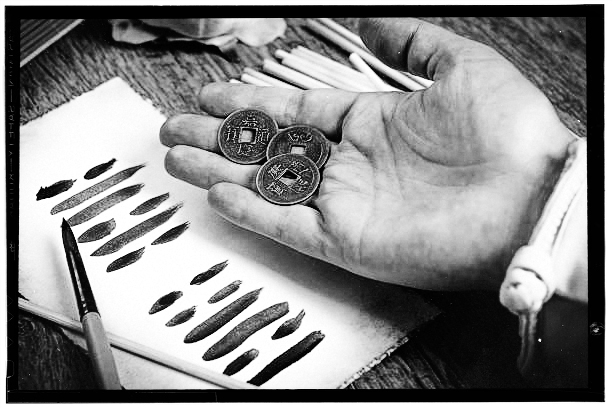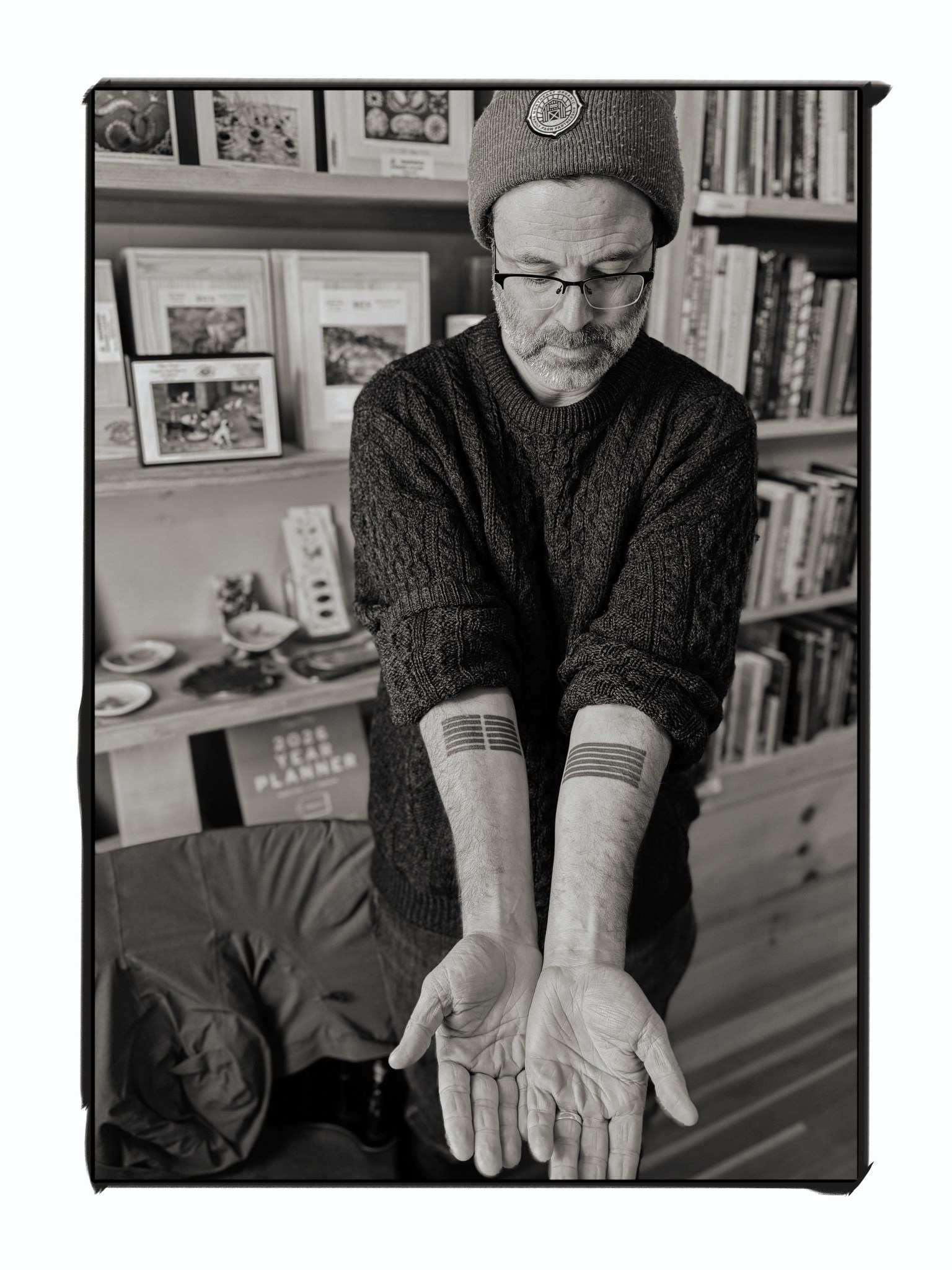
I was very excited to see the first two hexagrams of the I Ching tattooed on Bill Brauns arms when we first met. The hexagrams are from the I Ching (Book of Changes), an ancient Chinese classic text used for divination, wisdom, and understanding the universe’s principles, based on the interplay of yin (dark, receptive) and yang (light, active) forces, represented by 64 hexagrams (six-line figures) formed by combinations of trigrams (three-line figures). It serves as a philosophical system for guidance, offering insights into change, morality, and decision-making, rather than just predicting fate, evolving from an oracle to a cornerstone of Taoist and Confucian thought. Below, I ask Bill a few questions about his relationship with the I Ching.
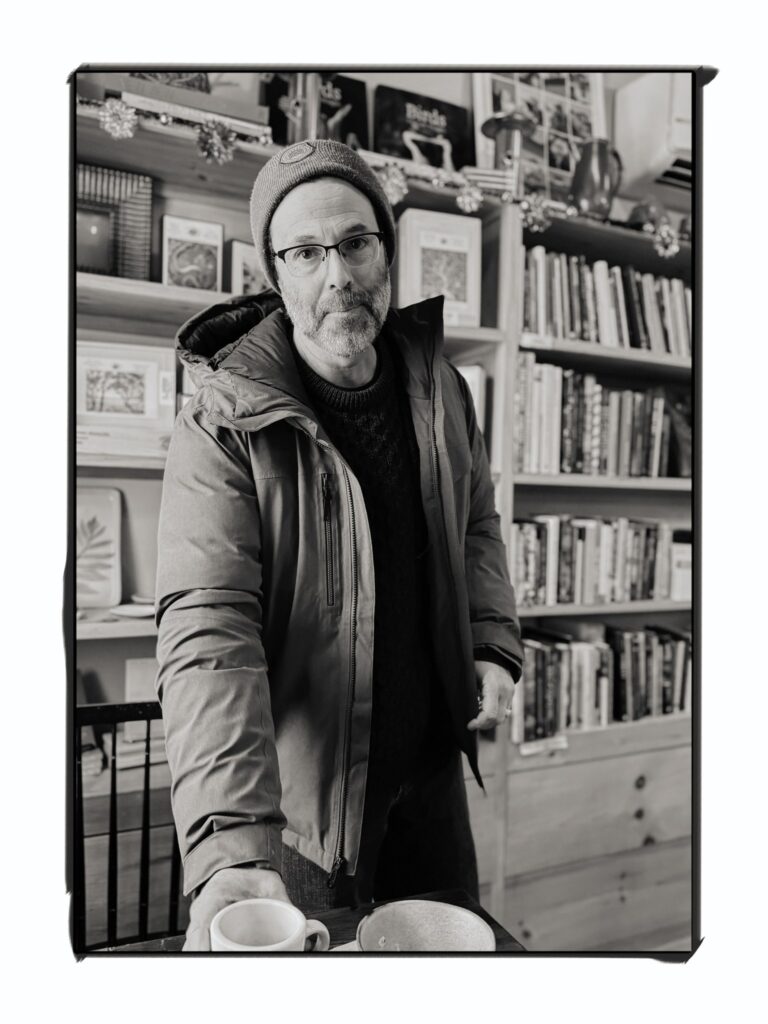
Merri: So Bill, tell me—how did you get exposed to the I Ching originally, and what kind of role did it play in your life?
Bill: It played a formative role for me. A little backstory: I’m the son of an ex-Catholic priest who left the priesthood in his 50s, married my mother—22 years younger—and started a family. They were adamant that my siblings and I not be raised in any formal religion, aside from the occasional baptism to appease the older relatives. A lot of people predicted we’d drift spiritually, but it turned out to be one of the greatest gifts I ever received.
Without the weight of doctrine, I could explore spirituality freely. I could look at religions comparatively, without the inherited baggage of Catholic guilt. That freedom allowed me to find my own way in.
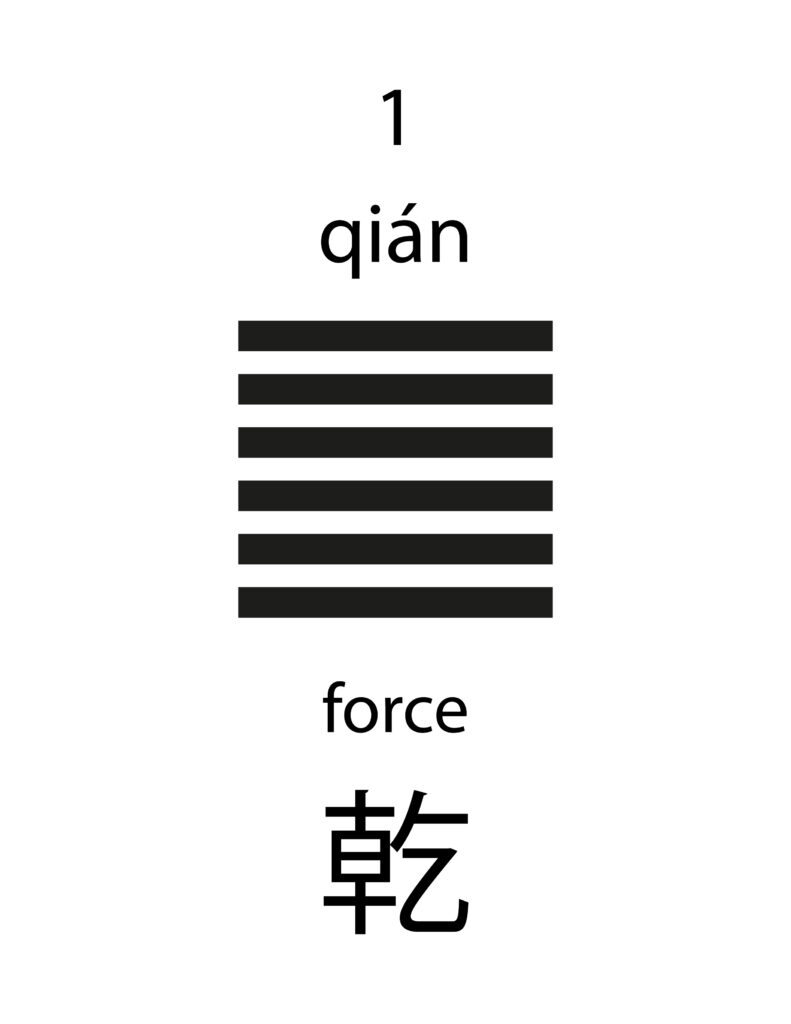
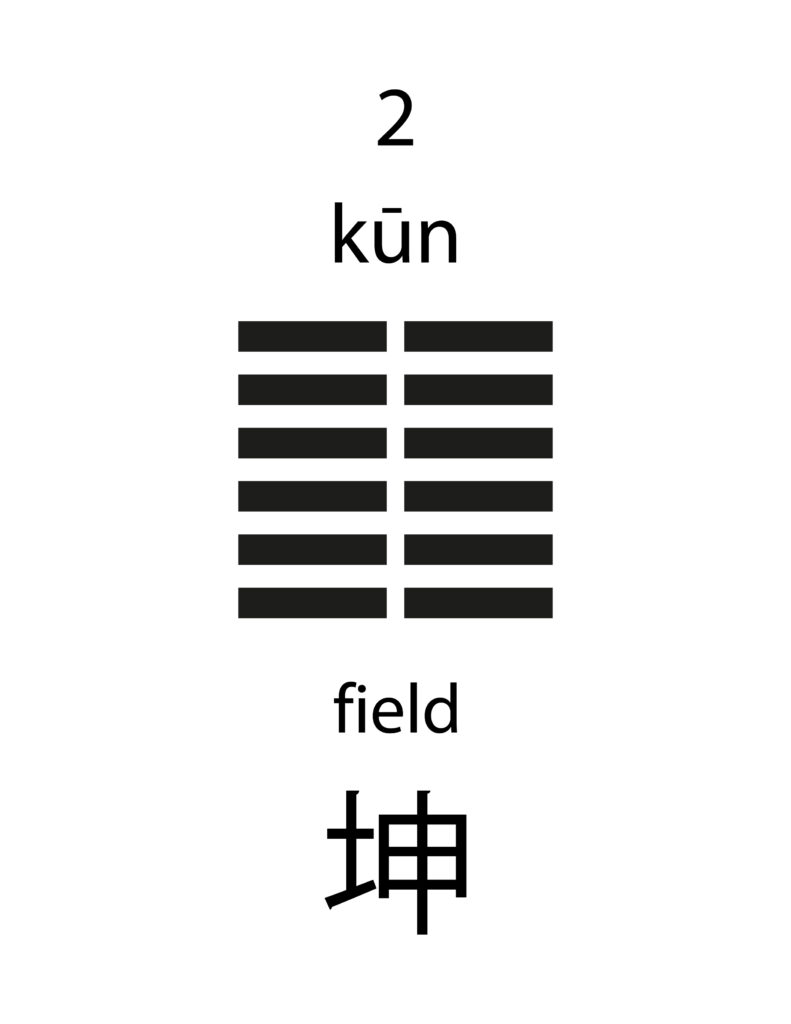
Enter the I Ching. I was spiritually searching, and Taoism—especially the Tao Te Ching—resonated deeply with me in my teens. Through studying psychology and reading Jung, I heard about the I Ching and was drawn to how flexible it seemed. There wasn’t a single prescribed way you had to approach it. Coming from a Catholic upbringing where everything has a prescribed gesture or order—tap this, pour that, say these words—the openness of the I Ching felt liberating.
I learned you could treat it as divination, as a philosophical guide, or simply as a structured way of engaging with chance. Its entry points felt accessible. I could bring my own needs to it.
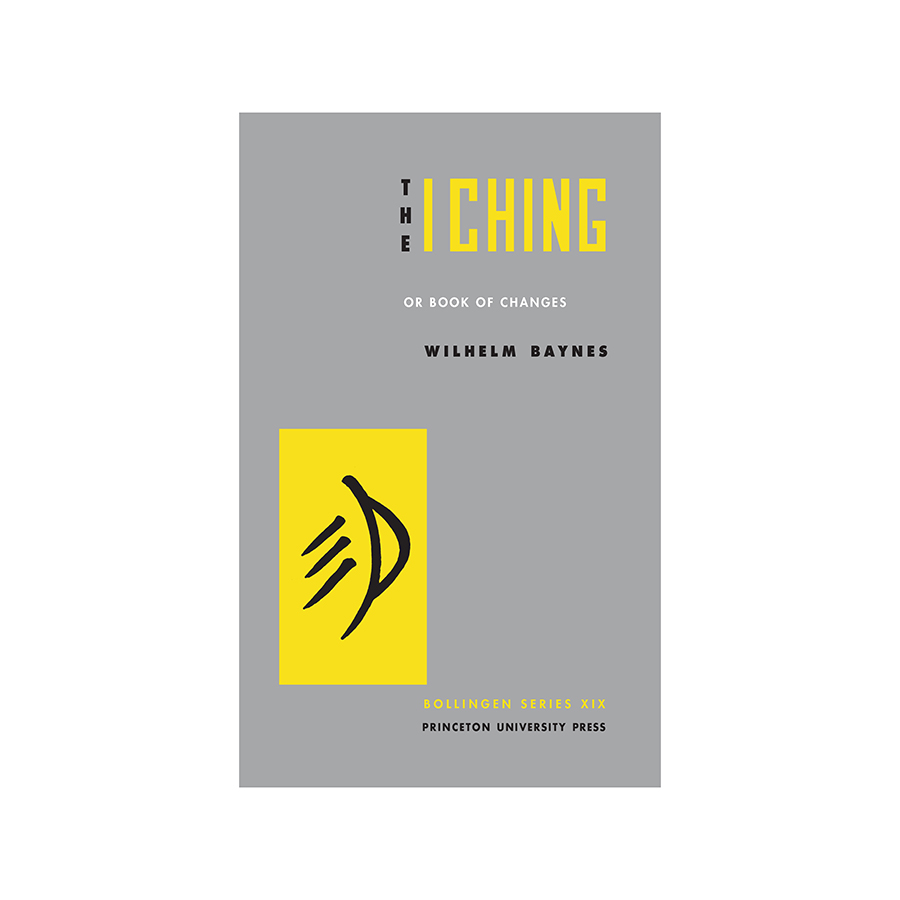
I was maybe eighteen or nineteen when I really sought it out. And this strange little thing happened: I went into the attic of my house, rummaging through old books, and there—left from my mother’s early college days—was an original print of the Wilhelm translation. I took it as a sign.
What still draws me to the I Ching is this: you can see the randomness of chance if you want to, or you can see it as a way of honoring the limits of human knowing. You don’t have to believe in a god dictating commands. You can simply approach what is beyond comprehension with reverence.
The first few consultations made the hair on my arms stand up. I would take an object—a shell, a reed—go to the beach or the river, flip it six times, embed it in the sand, sit with it, meditate, then go home and read the hexagram. That became my spiritual practice, alongside walking meditations and time in nature.
What amazed me was that every time I returned to a hexagram, it spoke directly to my experience—not vaguely, not like a Magic 8-Ball. It felt precise. And I could either say, “Well, this is just narrative coincidence,” or I could honor the long historical lineage behind the I Ching and the way it embodies the fluidity of change.
Studying philosophy at the time—Eastern philosophy, American Transcendentalism, and Postmodernism—the I Ching aligned with everything I was wrestling with around truth. Postmodernism suggests truth is subjective, but not arbitrary: it emerges from shared relational experience. The I Ching felt like a living example of that—truth as an ever-shifting process.
Merri: Do you feel like all the people who’ve ever used the I Ching give the book a cumulative energy?
Bill: I hadn’t thought of it that way, but yes. Not that I’m adding new lines to the text, but the multiple ways people have consulted it—especially in the West—have given it a kind of fluidity. And that fluidity is essential to how it expresses truth.
The I Ching shows truth as flux. The hexagrams are snapshots of states of change. They’re not static truths—they’re moments in motion. Ancient Chinese cosmology and quantum mechanics oddly mirror one another in this way: the idea that being is energetic, relational, always shifting.
The I Ching anchors you in the stream of change. When you throw the lines, you’re taking a pulse of where you are in that flux.
Merri: When the I Ching gives you something unexpected—or even the opposite of what you wanted—how do you deal with that?
Bill: Early on I had a couple moments where I thought, “Damn it, this isn’t what I need.” And that made me look at my approach. If I come to the book with grasping, or desperation, or with my own predetermined answers, then I’m not receptive. The issue isn’t the I Ching—it’s my intention.
I need a kind of spiritual housekeeping before I consult it. A clearing out. Once I’m open, the message—whatever it is—becomes meaningful.
Even when a hexagram didn’t match my expectations, it still revealed something. The text articulates universal dynamics of change. Sometimes the relevance isn’t obvious until you look at yourself from another angle. It’s like witnessing someone else’s behavior and suddenly recognizing something in your own experience that you hadn’t considered.
Check out Bills amazing seed saving organization https://www.freedseedfederation.org